Five Curl Routines for the First Weeks of Indoor Heating
Quick Answer: Indoor heating drops humidity sharply, which pulls moisture out of hair and turns previously well-defined curls frizzy and brittle. The fix is shifting the moisture-to-protein balance toward moisture, sealing with a heavier product, and adding a humidifier. Five routines below, from a full wash day to a two-minute refresh.
Summer’s problem was humidity making curls swell. Autumn’s problem is the opposite and it arrives on a single day — the day the heating comes on.

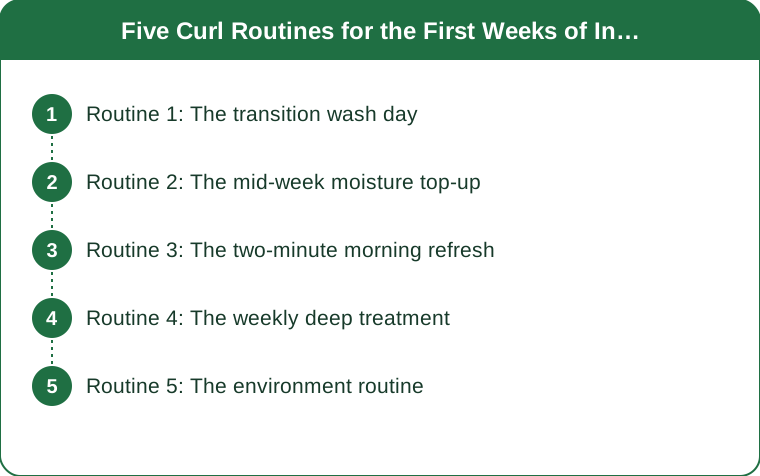
Routine 1: The transition wash day
This is the reset, done once as the heating starts, then repeated weekly.
Step 1 — Pre-poo. Apply an oil or a rich conditioner to dry hair, focusing on the ends. Leave 20 minutes. This limits how much moisture the shampoo strips, which matters far more in dry air.
Step 2 — Cleanse gently. Move to a sulfate-free or low-poo cleanser if you were using something stronger through summer. Scalp only, and let the runoff clean the lengths.
Step 3 — Condition heavily and detangle. More product than your summer amount. Detangle in sections with fingers or a wide-tooth comb while the conditioner is in.
Step 4 — Squish to condish. Cupping water into the hair with conditioner still in encourages curl clumping and drives moisture in. Rinse only partially — leaving some conditioner in is appropriate for dry-air months.
Step 5 — Layer while soaking wet. Leave-in, then cream, then gel. Applying to soaking hair is the difference between definition and frizz.
Step 6 — Dry with a diffuser on low heat, or plop and air dry. High heat in already-dry air is the fastest route to brittleness.
This routine takes about 45 minutes and sets up the whole week.
Routine 2: The mid-week moisture top-up
For day three or four, when definition is holding but the hair feels dry to the touch.
Step 1 — Mist lightly with water. A spray bottle, not a soak. You want damp, not wet.
Step 2 — Emulsify a small amount of leave-in between your palms and press it into the mid-lengths and ends. Avoid the roots, which are usually still fine.
Step 3 — Scrunch upward in sections rather than raking, which breaks clumps.
Step 4 — Add a pea-sized amount of oil or butter to the ends only. In dry air, sealing matters more than adding — the moisture you already have is escaping, and an occlusive layer holds it.
Step 5 — Air dry or diffuse for two minutes on cool.
Total time: about five minutes. This is the routine that extends a wash day from three days to five, which is worth more than any single product in the transition weeks.

Routine 3: The two-minute morning refresh
For flattened, slept-on curls when you have no time at all.
Step 1 — Wet your hands, not your hair. Run damp palms over the surface and scrunch.
Step 2 — Target the crown and the front only. These are the sections people see and the ones most affected by sleep. The back can usually be left alone.
Step 3 — One pump of a light refresher or diluted leave-in into the flattened sections.
Step 4 — Scrunch upward, then leave it alone. The most common refresh mistake is continuing to touch it while it dries, which is what creates frizz.
Step 5 — If a section will not cooperate, twist it around a finger and let it set while you do everything else.
The overnight setup matters more than the morning fix here. A satin pillowcase, a loose pineapple, or a satin bonnet reduces the friction that flattens curls in the first place, and in dry air it also reduces the moisture cotton pulls out overnight.
Routine 4: The weekly deep treatment
In dry-air months this moves from optional to load-bearing.
Step 1 — Choose moisture, not protein, unless your hair is genuinely damaged. This is the most common autumn mistake. Frizzy, dry-feeling hair in heated air is usually moisture-depleted, and adding protein to moisture-starved hair makes it feel straw-like. If your curls feel dry and limp, go moisture. If they feel mushy and overly elastic when wet, that is when protein helps.
Step 2 — Apply to clean, damp hair in sections. Saturate the ends most heavily.
Step 3 — Add gentle heat. A shower cap for 20-30 minutes, or a warm towel over it. Heat opens the cuticle and improves penetration.
Step 4 — Rinse with cool water to close the cuticle.
Step 5 — Proceed with your normal styling on soaking wet hair.
Weekly through the heating months. If you did this monthly in summer, the increase is the point.
Routine 5: The environment routine
The one that is not about hair products at all, and arguably the most effective of the five.
Step 1 — Add a humidifier where you sleep. Indoor heating commonly drops relative humidity below 30%. Bringing a bedroom to 40-50% helps hair, skin, and sinuses simultaneously. This does more for autumn frizz than any product change.
Step 2 — Move your styling away from the radiator. Drying near a direct heat source is far harsher than it feels.
Step 3 — Switch to satin or silk on the pillow. Cotton is absorbent and abrasive, and both properties matter more when the air is already pulling moisture out.
Step 4 — Watch what your hat does. As soon as hat season starts, friction at the crown and the hairline creates a specific band of frizz. A satin-lined hat solves it entirely and is one of the highest-return purchases in curly hair care.
Step 5 — Drink water and eat normally. A minor factor, but hair is the last tissue to receive anything, and severe restriction does show up in it eventually.
TL;DR:
- Indoor heating drops humidity below 30%, which pulls moisture from hair — the opposite of the summer problem.
- Shift the balance toward moisture and away from protein unless your hair is genuinely damaged.
- Seal with an occlusive on the ends; in dry air, holding moisture beats adding it.
- A bedroom humidifier at 40-50% does more than any product change.
- Satin on the pillow and inside your hat removes two friction sources at once.
The transition weeks are short and they are the ones where people conclude their routine has stopped working. It has not — the air changed. Adjust for the air and the routine works again.
Keep Reading
This article is for general informational and styling purposes only. Fit, sizing, and product availability may vary.