Curly Hair and Workouts: Refreshing Sweaty Curls Without Rewashing
Quick Answer: Sweat is mostly water and a little salt - it does not make curls dirty, but the salt left behind after the water evaporates dries the hair and roughs up definition at the roots. The system: contain curls loosely during the workout, cool down fully before touching them, dry the scalp rather than the length, then refresh with a light mist of water and diluted leave-in, scrunching only where the pattern collapsed. A true wash is only owed every two to three sweaty sessions, or the moment the scalp itches.
The cruelest math in curly hair is that a wash-and-style takes ninety minutes and a workout takes forty-five. If every session cost a full wash day, no one with curls would ever exercise - and late summer, with its humid runs and back-to-school schedule compression, is exactly when the refresh skill pays for itself. The good news: sweat is far more manageable than the internet believes.

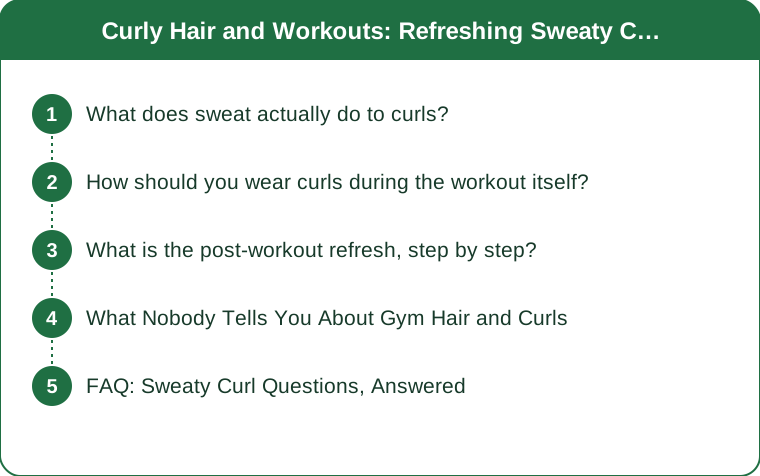
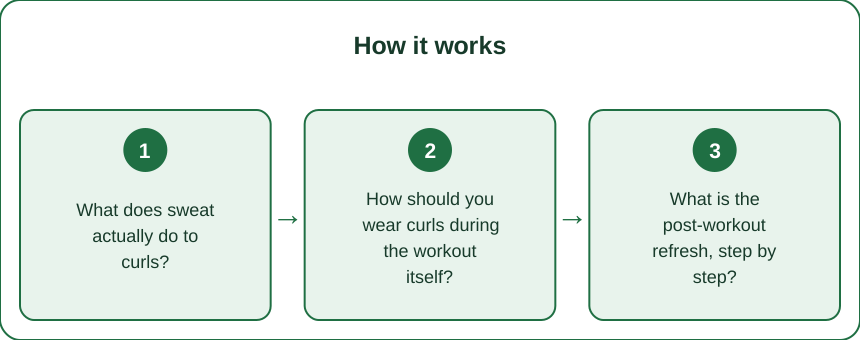
What does sweat actually do to curls?
Less than it feels like, and different from what most people assume.
Sweat is not dirt. It is roughly 99 percent water, plus salt and trace minerals, arriving from glands at your scalp. Fresh sweat does not damage hair or make it unhygienic - the problems all start with what happens as it dries.
The salt is the story. When the water evaporates, salt stays behind on the hair shaft and scalp. Salt is hygroscopic - it pulls moisture out of the hair around it - which is why post-gym curls feel crunchy and parched even though they were just soaked. It is the same mechanism as beach hair, minus the romance. Left for days, salt buildup plus skin oils leaves the scalp itchy and the roots dull.
The root zone takes the structural hit. Sweat starts at the scalp, so the first inch of hair gets rewetted while the mid-lengths stay dry. Rewetted curls reset - into whatever shape they dry in. If they dry flattened under a tight ponytail or a headband, you get straightened, fuzzy roots under intact ends: the classic gym-hair silhouette. Nothing was damaged; the pattern was simply re-cast badly.
Friction and heat finish the job. A sweaty neck, a towel rubbed briskly, a hood, the back of a bench - wet hair is at its most fragile and most moldable, and casual friction while it is damp creates the frizz people blame on sweat itself.
So the whole strategy writes itself: control the shape curls hold while sweat-damp, get the salt dealt with before it accumulates, and re-set only the zone that actually collapsed - which is almost always just the roots and hairline.
How should you wear curls during the workout itself?
The goal is containment without tension - curls held out of the sweat zone, in a shape you would be happy for them to dry in.
The loose high pineapple is the default for a reason. Gathered at the crown with a satin scrunchie, curls sit above the sweatiest real estate - the nape and hairline - and any resetting that happens at the roots happens in a lifted position rather than a flattened one. Keep it loose enough to slide a finger under; a workout is exactly when tension damage accelerates, because wet hair stretches further under the same pull.
Match the style to the movement. For lifting and low-impact work, a claw clip fold holds without any elastic crease. For running and HIIT, the pineapple or a loose braid keeps bounce from tugging at the roots on every stride. For anything lying down - mat work, bench press - a high style keeps the back of your head from grinding curls into the surface.
Rethink the headband. A wide, snug band soaks up sweat but also irons the hairline flat and leaves a dent that no refresh can fully fix. If you use one, choose a soft, loose spa-style band, push it back off the hairline, and take it off the moment the workout ends rather than wearing it home.
Fabric details do quiet work. A sweat-wicking top matters more than it seems - curls that rest against a soaked cotton shoulder stay wet longer and frizz along the contact line. The same logic that puts you in a proper sports bra and sweat-wicking leggings instead of cotton applies to what your ends are touching for an hour.
And resist the mid-workout touch. Pushing damp curls off your face with your hands, repeatedly, is a frizz manufacturing process. Contain them well enough at the start that your hands have no reason to visit.

What is the post-workout refresh, step by step?
Ten minutes, most of it waiting - and the order matters more than the products.
Step 1: Cool down before you touch anything. A hot scalp keeps producing sweat for ten or fifteen minutes after the workout ends. Refreshing during that window means restyling hair that is still being rained on. Stretch, change, drink water; let the system power down.
Step 2: Dry the scalp, not the curls. Tip your head and blot the roots with a microfiber towel or cotton tee - press, do not rub. If you have access to a dryer, sixty seconds of cool air aimed at the roots with fingers gently lifting does more than any product. You are evaporating sweat before it dries flat, and cool air means no heat damage and no extra frizz.
Step 3: Release and assess. Take the pineapple down and look honestly. Usually the verdict is: ends fine, mid-lengths fine, roots and hairline flattened or fuzzy. Only treat the crime scene - global restyling wastes time and product on hair that was doing fine.
Step 4: Mist, then scrunch, locally. A spray bottle with water plus a small amount of leave-in conditioner - diluted, not neat - misted at the roots and hairline until damp, not soaked. Scrunch upward with a palm, twirl the hairline pieces around a finger, and leave everything else alone. The water dissolves the salt film; the leave-in replaces the moisture the salt pulled out.
Step 5: Dry in the shape you want. Air dry lifted - a loose clip at the crown while you commute home works - or another minute of cool diffuser air. The refresh is casting a new shape; do not cast it under a beanie or a car headrest.
When the answer is actually a wash: an itchy or tender scalp, a third sweaty day, product buildup flaking, or chlorine involvement. The refresh manages salt; it does not replace cleansing forever.
What Nobody Tells You About Gym Hair and Curls
Dry shampoo behaves differently on curls. It was designed for straight roots that show oil; sweaty curly roots need salt dissolved, not oil absorbed, and powder on top of salt builds a paste that dulls everything. If you love dry shampoo, use it on genuinely oily roots on non-gym days, and let water do the post-workout job.
The hairline curls are a different species. Those fine baby hairs at your temples collapse first, frizz first, and respond to almost nothing except being individually finger-twirled while damp. Two minutes on the hairline changes how styled the whole head reads - it is the highest-leverage real estate you own.
Chlorine and sweat are different problems. Sweat leaves salt that water removes. Pool water leaves chlorine that bonds to the hair and needs an actual rinse and ideally a clarifying wash. A swim day is a wash day; a gym day usually is not. Budget accordingly.
Your changing-room flip matters. The habit of flipping all your hair forward, gathering it, and flipping back sets the roots in whatever direction the flip left them. Do the flip before the roots finish drying, on purpose, in the direction you want volume - it is free styling that most people do accidentally and backwards.
Outdoor late-summer sessions add a scalp sunscreen question. A part line that burned on a Saturday run peels a week later and looks exactly like terrible dandruff. A hat solves it, a mist sunscreen solves it, and neither ruins curls the way the peeling ruins your week.
FAQ: Sweaty Curl Questions, Answered
Does sweat damage curly hair?
Not directly - sweat is water and salt, not acid. The damage pathway is indirect: salt residue dries the hair out, and fragile wet hair picks up friction damage from towels, headbands, and restless hands. Manage those two and sweat is cosmetically annoying at worst.
How many workouts can I go between washes?
For most curl types, two to three sweaty sessions with refreshes in between, then a proper wash - sooner if the scalp itches, feels tender, or you have been swimming. The scalp, not the calendar, is the authority.
What should be in a refresh spray?
Mostly water, a small amount of your leave-in conditioner, and optionally a drop of lightweight oil, shaken before each use. Commercial curl refreshers work too - the active ingredient in all of them is the water. Avoid anything heavy enough to need washing out, or the refresh starts costing wash days instead of saving them.
How do I fix helmet hair or headband dents in curls?
Only water resets a cast dent - mist the dented band of hair until properly damp, scrunch or finger-coil it, and let it re-dry lifted. Products layered on a dry dent just decorate it. Prevention is better: loosen the helmet pads slightly, or slide the headband back off the hairline.
TL;DR:
- Sweat is water plus salt: not dirty, but the salt dries curls out and the rewetted roots re-set in whatever shape they are held.
- Contain curls loosely and high during the workout - satin scrunchie, no tension, headband off the hairline.
- Refresh order: cool down fully, dry the scalp with cool air, then mist and scrunch only the collapsed zones.
- Dry shampoo is the wrong tool for salt; water is the right one.
- Wash every two to three sweaty sessions or when the scalp says so - swims always count as wash days.
The workout does not owe you a wash day. It owes you ten minutes of triage, and the curls owe you the next two days back.
Keep Reading
This article is for general informational and styling purposes only. Fit, sizing, and product availability may vary.