Look 1: What Plopping Actually Is and Why Curly Hair Communities Swear By It
Quick Answer: Plopping is a technique where wet, product-coated curly hair is wrapped up inside a t-shirt or microfiber towel (not a regular terry towel) for 10-20 minutes, using the fabric’s gentle grip to help curls clump and set with less frizz than air-drying loose or rubbing with a regular towel.
You’ve seen ‘plopping’ mentioned constantly in curly hair content without a clear explanation of what it actually involves or why it’s different from just towel-drying. Here’s the specific mechanism and method.
Look 1: What plopping actually is, mechanically
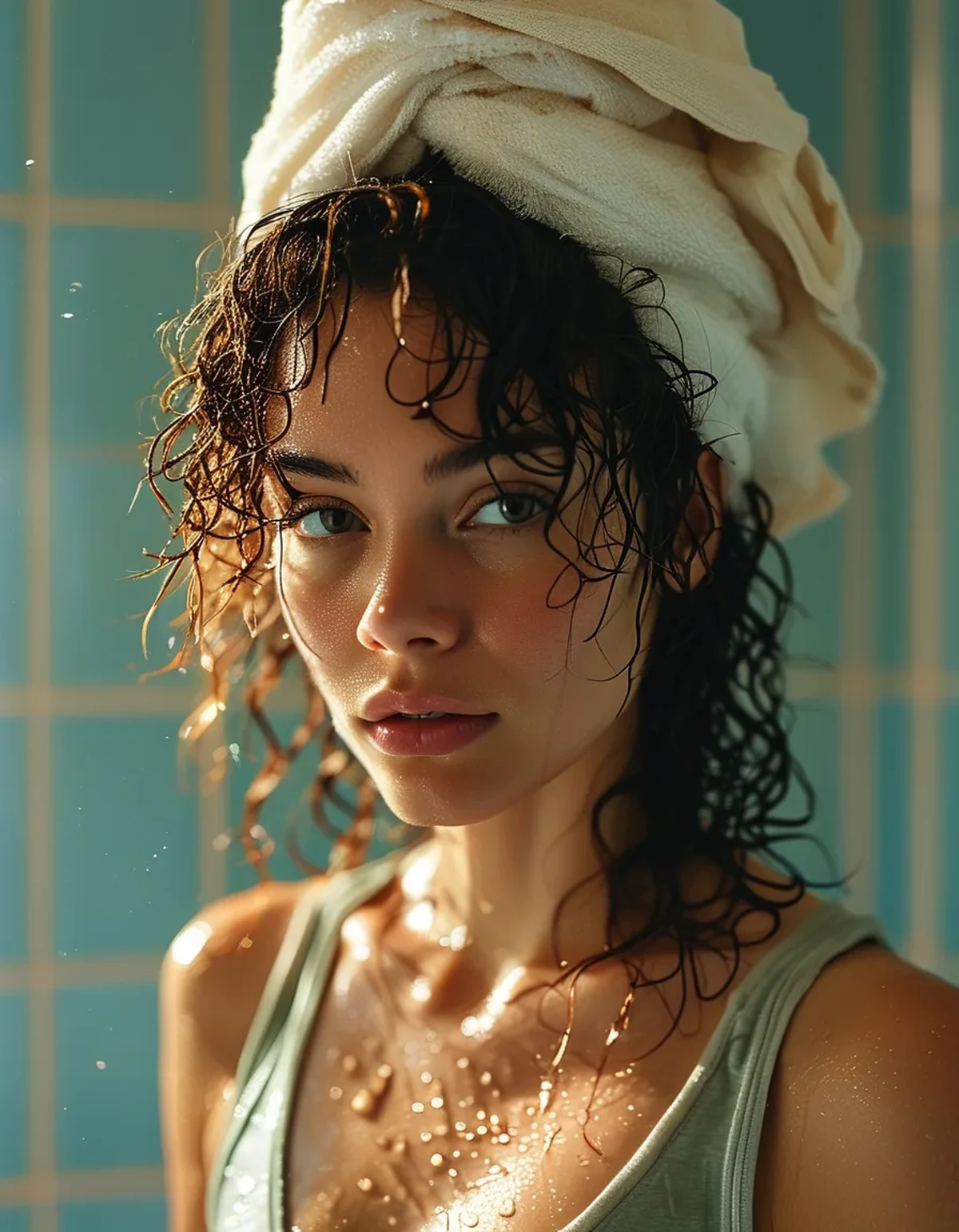
Plopping involves flipping wet, product-coated hair forward into the center of a t-shirt or microfiber towel laid flat, then wrapping the fabric up and around to cradle the curls close to your scalp — the goal is encouraging curls to clump together and set in their natural shape while minimizing movement and friction during drying.
Look 2: Why the specific fabric choice (t-shirt vs regular towel) actually matters
Regular terry cloth towels have a rougher, looped texture that roughs up the hair cuticle and creates significant frizz when curls rub against it. A t-shirt or dedicated microfiber towel has a smoother surface that grips gently without the same friction, which is the entire reason this specific fabric substitution became a core curly hair technique.
Look 3: How long you should actually leave hair plopped
10-20 minutes is the commonly recommended range — long enough for excess water to absorb into the fabric and curls to begin setting, but not so long that hair fully dries in a compressed position, which can create unwanted flat spots or disrupted curl pattern at the roots.
Look 4: What plopping does and doesn’t replace in a routine
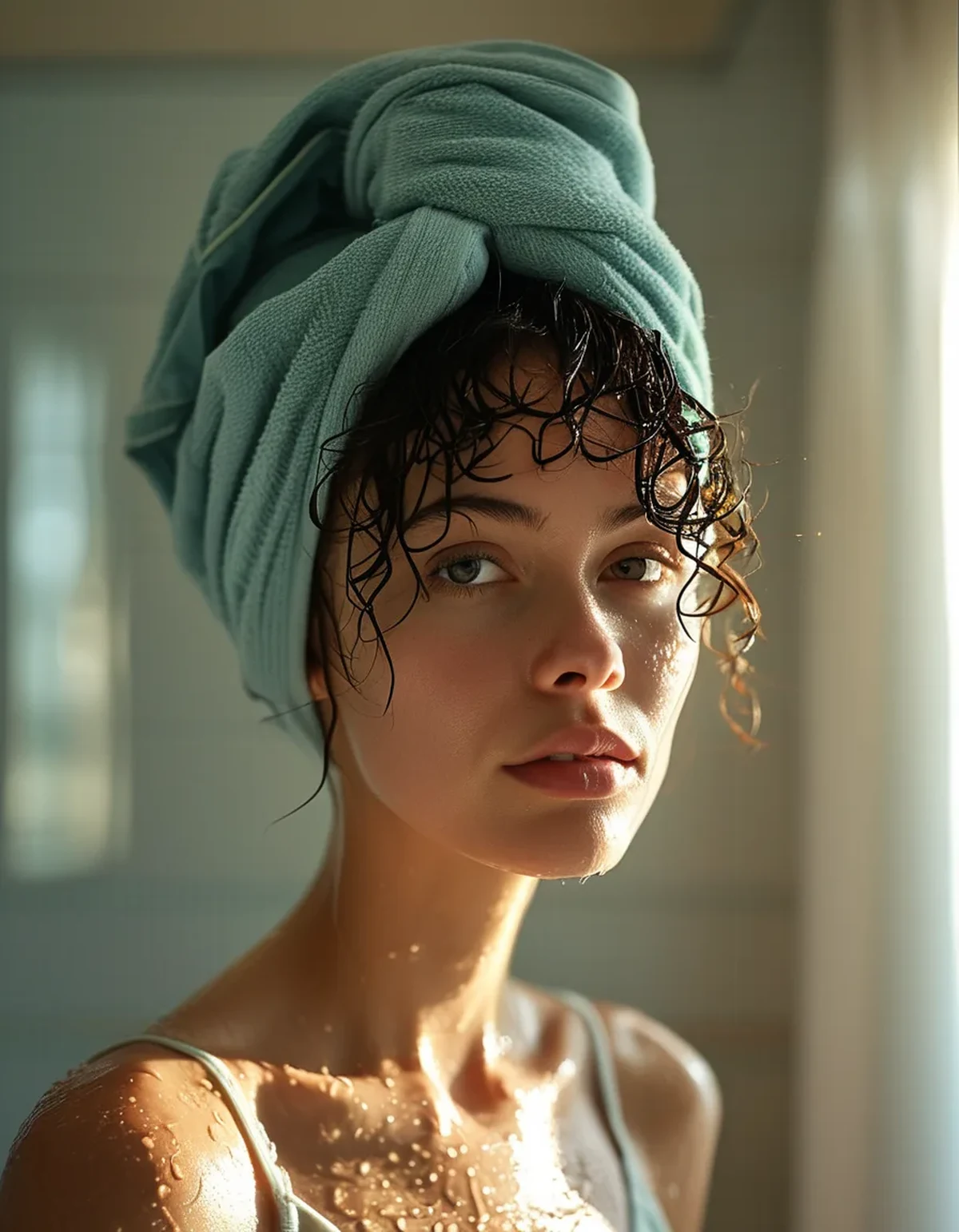
Plopping is typically a step before diffusing or air-drying, not a replacement for either — it removes excess water and helps set initial curl clumping, after which many people still diffuse or continue air-drying to fully dry the hair and add volume at the roots.
Look 5: Common plopping mistakes that reduce how well it works
Plopping hair that’s still dripping wet (rather than lightly squeezed of excess water first) can leave hair over-saturated and prone to falling flat once unwrapped. Similarly, disturbing or touching curls significantly before or during plopping disrupts the clumping the technique is meant to encourage.
FAQ: Plopping Technique Questions, Answered
Does plopping work for all curl types?
It tends to work best for wavy through curly hair types with enough natural clump tendency to benefit from the gentle compression — very fine, straight-leaning hair may not see as dramatic a benefit.
Can plopping be done overnight?
Some people do plop overnight, though the more common recommendation is the shorter 10-20 minute window followed by diffusing, since overnight plopping can occasionally cause more root flatness for some hair types.
Is a specific ‘plopping towel’ necessary, or does any t-shirt work?
Any clean, smooth-surfaced cotton t-shirt works for the technique — dedicated microfiber plopping towels are a convenience upgrade, not a requirement for the method to work.
TL;DR:
- Plopping wraps wet, product-coated curls in a t-shirt or microfiber towel to help them clump and set
- The smooth fabric reduces the frizz-causing friction a regular terry towel causes
- 10-20 minutes is the general recommended window before unwrapping
- It’s typically a step before diffusing or air-drying, not a full replacement for either
A specific fabric and a short, defined time window are what separate plopping from simply towel-drying your hair.
Keep Reading
This article is for general informational and styling purposes only. Fit, sizing, and product availability may vary.