The Curly Hair Product Graveyard: Why You Own Twelve Products That Don't Work Together
A drawer or shelf full of half-used curly hair products, each bought with real hope and each eventually abandoned, is such a common experience in the curly hair community that it has its own informal name — the product graveyard. Here is why curly hair routines specifically tend to accumulate this way, and how to actually audit and rebuild a routine that works as a coordinated system rather than a pile of individual hopeful purchases.

Why Curly Hair Routines Specifically Tend to Accumulate This Way
The specific dynamics: the the-curl-pattern-and-porosity-variability-makes-trial-and-error-almost-unavoidable (the wide range of curl types and hair porosity levels meaning product recommendations that work well for one curl pattern often don’t transfer directly to another, driving a lot of necessary experimentation, per the curly-girl-method-beginners-guide logic — the genuine-individual-variability-makes-some-trial-and-error-structurally-unavoidable-not-just-a-personal-failing), the the-a-single-disappointing-result-often-gets-blamed-on-one-product-rather-than-the-whole-combination (the tendency to swap out just one product after a bad hair day, rather than considering that the issue might be how several products interact together, leading to accumulating replacements rather than resolving the actual system-level problem — the blaming-single-products-rather-than-the-combination-drives-accumulation-rather-than-resolution), the the-social-media-recommendations-create-constant-fomo-around-the-next-holy-grail-product (the endless stream of curly hair product recommendations and ‘holy grail’ claims online creating ongoing pressure to keep trying new things even when an existing routine is working reasonably well — the constant-new-recommendations-create-pressure-to-keep-adding-rather-than-settling), the the-product-buildup-itself-creates-symptoms-that-get-misdiagnosed-as-needing-a-different-product-rather-than-fewer-products (the actual buildup from too many layered products causing dullness or crunch that gets interpreted as ‘this product isn’t working’ and addressed by adding yet another product rather than removing some, per the curly-hair-product-buildup-guide logic — the buildup-itself-often-gets-treated-with-more-product-rather-than-correctly-diagnosed-as-a-too-many-products-problem), the the-seasonal-and-humidity-changes-create-genuine-need-for-some-product-variation-that-can-spiral-into-full-accumulation (the real seasonal need for different products in different humidity levels, per the curly-hair-humidity-summer-guide logic, being a legitimate reason for some product rotation that can spiral into keeping everything ever tried rather than a genuinely curated seasonal set — the legitimate-seasonal-variation-need-can-spiral-into-keeping-everything-rather-than-a-curated-rotation), and the reframe (the product graveyard as the predictable result of real curl-pattern variability, single-product blame after bad results, social pressure toward constant new products, misdiagnosed buildup, and legitimate but unmanaged seasonal variation — a systemic pattern, not a personal impulse-buying problem).

How to Actually Audit the Existing Collection
The audit process: the group-existing-products-by-function-not-by-brand-or-purchase-date (the sorting the collection into functional categories — cleanser, leave-in, styler, gel — rather than by brand loyalty or how recently something was bought, revealing actual redundancy within categories — the sort-by-function-to-see-the-real-redundancy-clearly), the the-identify-which-products-are-genuinely-still-in-active-rotation-versus-untouched-for-months (the honestly noting which products have actually been used recently versus sitting untouched, since untouched products for months are effectively already-abandoned regardless of whether they’ve been formally discarded — the untouched-for-months-is-effectively-already-abandoned-just-not-yet-acknowledged), the the-check-for-ingredient-conflicts-within-the-current-active-combination (the reviewing whether current actively used products are actually formulated to work together — protein-heavy products stacked without balance, for instance — rather than assuming any combination of individually good products works fine together, per the protein-and-moisture-balance-for-curls-guide logic — the check-compatibility-of-the-active-combination-not-just-each-products-individual-quality), the the-note-which-products-were-bought-to-solve-a-problem-that-a-different-single-product-already-solves (the identifying redundant purchases made to solve the same underlying problem an already-owned product addresses, often from not realizing the connection at the time of purchase — the redundant-problem-solving-purchases-are-common-and-worth-specifically-identifying), and the frame (the audit as grouping by function, honestly noting actual usage versus abandonment, checking whether the active combination is actually formulated to work together, and identifying redundant problem-solving purchases — a genuinely revealing exercise most people haven’t actually done despite owning the products for a long time).
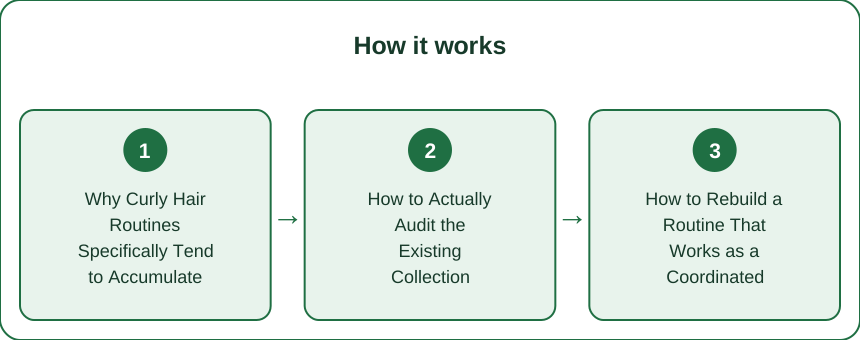
How to Rebuild a Routine That Works as a Coordinated System
The rebuild approach: the choose-one-product-per-functional-category-as-the-current-working-set (the committing to a single chosen product per function — one cleanser, one leave-in, one styler — as the active routine, rather than continuing to rotate unpredictably between several options in the same category — the one-per-category-creates-an-actual-coordinated-system-instead-of-random-rotation), the the-introduce-any-new-product-one-at-a-time-into-an-otherwise-stable-routine (the testing any new addition against an otherwise unchanged routine specifically so its actual individual effect can be assessed, rather than changing multiple products simultaneously and being unable to tell what caused what — the one-change-at-a-time-lets-you-actually-attribute-cause-and-effect), the the-give-a-new-product-a-real-multi-wash-trial-before-judging-it (the evaluating a new product across several wash days rather than a single use, since one bad hair day can have many causes unrelated to the product itself — the multi-wash-trial-before-judgment-avoids-blaming-a-product-for-an-unrelated-bad-hair-day), the the-build-in-a-seasonal-review-rather-than-an-ongoing-constant-search (the scheduling a deliberate seasonal check-in to adjust the routine for humidity or weather changes, rather than an ongoing, unstructured constant search for the next product — the a-scheduled-seasonal-review-replaces-a-constant-unstructured-search), the the-actually-discard-or-give-away-products-confirmed-not-in-the-working-routine (the following through on removing products that the audit confirmed aren’t part of the current working system, rather than keeping them ‘just in case,’ which is how the graveyard rebuilds itself right after a fresh audit — the actually-removing-confirmed-non-working-products-prevents-the-graveyard-from-simply-reforming), and the frame (the rebuild as choosing one product per function as the current working set, introducing new products one at a time with a real multi-wash trial, scheduling seasonal reviews instead of a constant search, and actually following through on discarding confirmed non-working products — a coordinated system rather than an ever-growing individual product pile).
The curly hair product graveyard forms because genuine curl pattern and porosity variability makes some trial and error structurally unavoidable, a single disappointing result usually gets blamed on one product rather than how the whole combination interacts, constant social media recommendations create pressure to keep trying new things even when an existing routine works fine, actual product buildup gets misdiagnosed as needing yet another product rather than correctly identified as too many layered products, and legitimate seasonal variation needs spiral into keeping everything ever tried rather than a genuinely curated rotation. Auditing an existing collection means grouping products by function rather than brand or purchase date to reveal real redundancy, honestly noting which products have actually been used recently versus sitting untouched for months, checking whether the currently active combination is actually formulated to work together rather than assuming any combination of good products is fine, and identifying purchases that redundantly solve a problem an already-owned product already addresses. Rebuilding a coordinated routine means committing to one product per functional category as the working set, introducing any new addition one at a time with a real multi-wash trial before judging it, scheduling a deliberate seasonal review instead of an ongoing unstructured search, and actually following through on discarding products the audit confirmed aren’t part of the working routine.
Keep Reading
This article is for general informational and styling purposes only. Fit, sizing, and product availability may vary.