Five Protective Styles for Curls When Mornings Get Busy Again
Quick Answer: The five styles that work best for busy mornings are the pineapple with a satin scrunchie, the half-up puff, the two-strand twist-back, the low bun over damp roots, and the claw-clip fold. All five keep tension low, protect the curl pattern from friction, and can be built on second or third-day hair without a full refresh - which is the whole point when there are eleven minutes before you leave.
The end of August does something specific to curl routines. The humidity is still high, the schedule suddenly is not flexible any more, and the wash-day-and-air-dry rhythm that worked in July stops fitting the week. These five styles all start from hair you already have rather than hair you have time to redo.
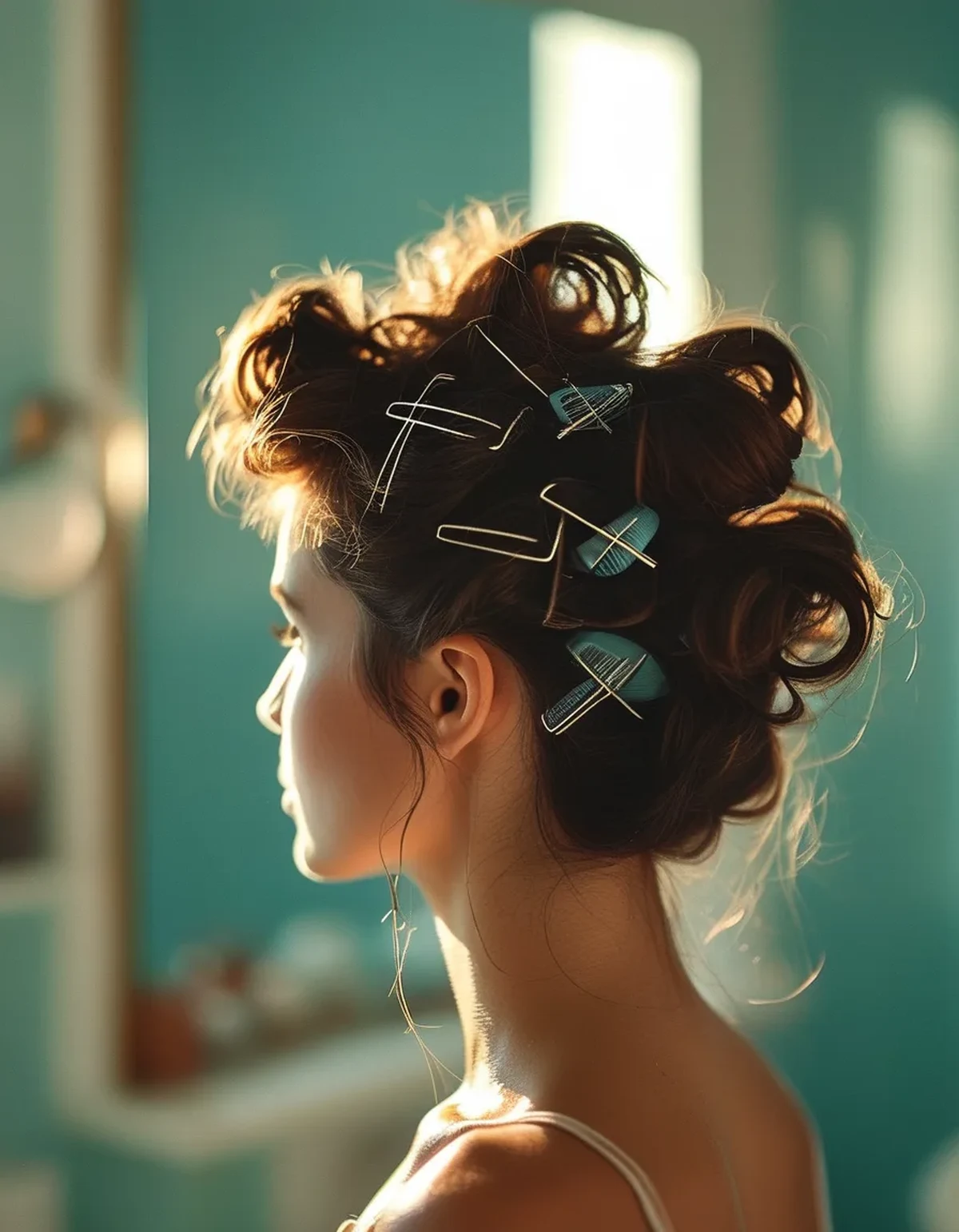
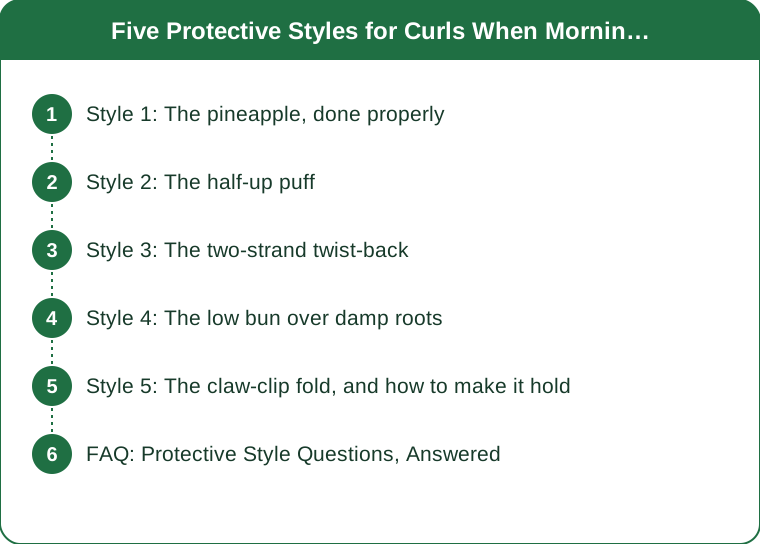
Style 1: The pineapple, done properly
The most useful style in the entire curly repertoire, and the one most often executed in a way that causes damage.
What it is: hair gathered loosely at the very top of the head and secured so the curls fall forward over the forehead, keeping length off the neck and preventing the back of the head from being crushed.
Why it protects. Curls flatten and lose definition where they press against fabric or skin. The pineapple lifts the bulk of the hair away from both, so second and third-day curls hold their shape considerably longer. It is also the standard overnight protective position, which means a morning pineapple is really just an extension of good overnight practice.
Doing it without damage. Use a satin or silk scrunchie rather than an elastic. Flip your head forward, gather without combing, and secure with the scrunchie loose enough to slide slightly. If your scalp feels pulled, it is too tight - repeated tension at the same hairline spot is a genuine cause of thinning over time.
For shorter curls, place the gather further forward, closer to the front hairline, so the shorter pieces at the back are not fighting to reach.
Time: about ninety seconds. Add a wide headband or scarf across the front hairline if the front pieces are refusing to cooperate, and you have solved the two hardest zones in one move.
Style 2: The half-up puff
The compromise style for days when you want curls visible but need the front out of your face.
What it is: the top third to half of the hair gathered up and secured, with the rest left down in its curl pattern.
Why it works on busy mornings. The front and crown sections are the ones that get flattened, frizzed, and disturbed overnight and during a commute. Gathering exactly those sections up hides the problem area and displays the sections that survive best - the mid-lengths and ends.
How to build it in five minutes:
- Section from roughly the temples back to the crown with your fingers rather than a comb.
- Mist that section lightly with water or a leave-in diluted in a spray bottle. Do not soak it.
- Scrunch upward with your palm to re-form the curls in that section.
- Secure with a satin scrunchie or a claw clip, leaving the gathered section loose enough to keep volume at the crown.
The detail that makes it look intentional: leave two face-framing pieces out at the front, and give those a quick scrunch with a pea-sized amount of gel or cream. The eye reads the front pieces as the finish of the style, so a small amount of effort there does disproportionate work.
Time: four to five minutes, most of which is the misting and scrunching rather than the styling.
Style 3: The two-strand twist-back
The style for day three or four, when definition has genuinely gone and there is no time for a full refresh.
What it is: two or four chunky two-strand twists starting at the front hairline and running back, secured behind the ears or joined into a low gather at the back.
Why it protects. Twisting encloses the hair shaft, which reduces friction against clothing, collars, and bag straps. It also means the sections inside the twist keep their moisture better through a hot day.
The unexpected benefit: taking the twists out that evening or the next morning leaves you with a stretched, defined wave pattern - so the style is simultaneously a protective style and the setting stage for the next day’s look. On a genuinely rushed week, this is the highest-value ten minutes available.
How to do it fast:
- Work on damp-ish hair, or mist each section as you go.
- Take sections roughly the width of two fingers at the front hairline.
- Add a small amount of cream or gel to each section before twisting, which holds the twist and gives the takedown pattern.
- Twist the two strands around each other going back over the head, keeping the tension gentle at the root.
- Pin behind the ear or gather everything into a low scrunchie.
Time: six to ten minutes depending on how many twists. Two large ones is the fast version and looks deliberate.
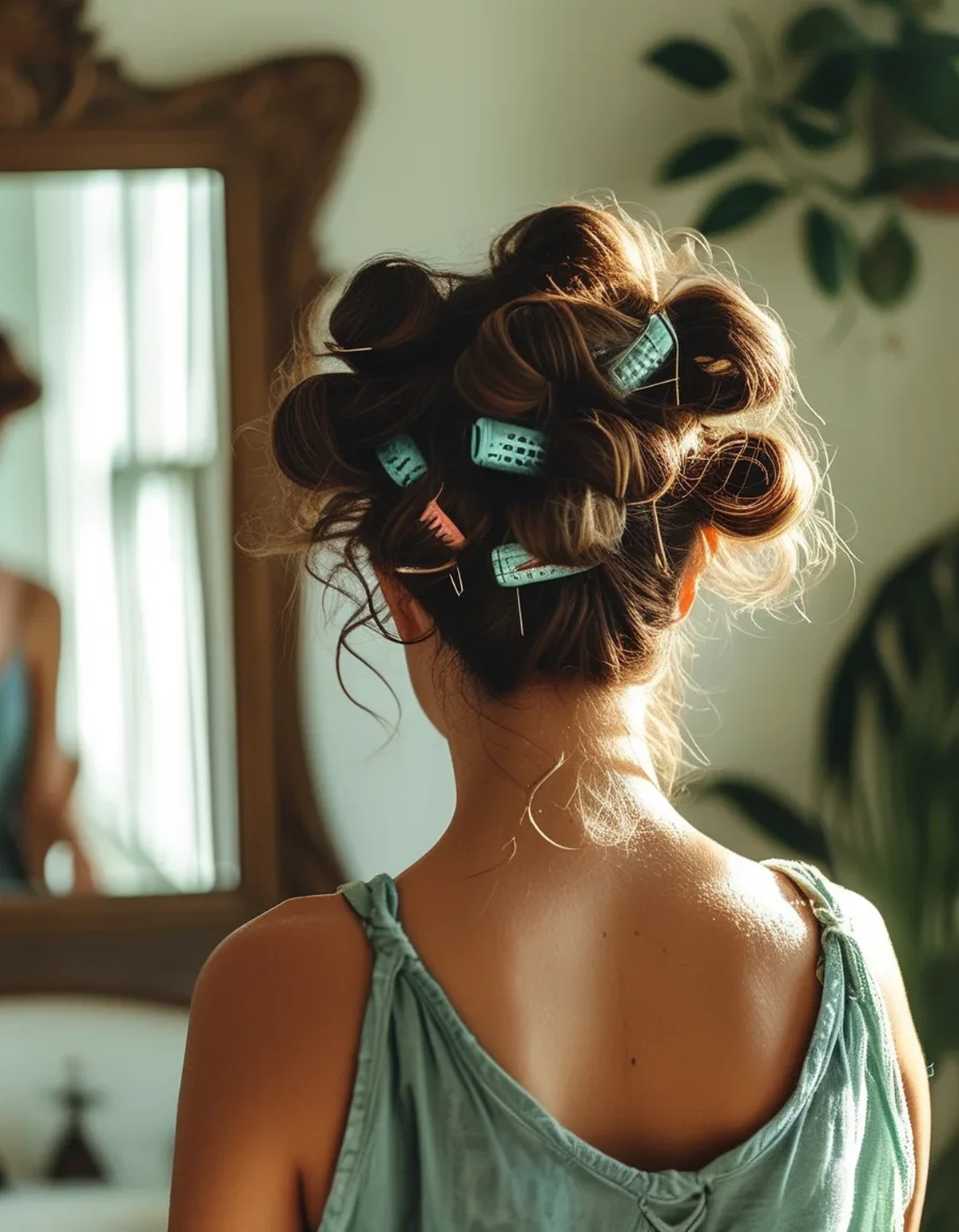
Style 4: The low bun over damp roots
The style for the mornings where the roots are flat and the ends are fine - which is the single most common day-two situation.
Why the root is the problem. Curls collapse at the root first, because that is where the weight of the hair and any overnight pressure acts. The mid-lengths and ends usually still have pattern. So the efficient move is to reset the roots and hide the rest.
How to do it:
- Mist only the roots and the crown - not the length - with water.
- Massage the scalp with your fingertips for twenty seconds to lift and separate at the base.
- Gather everything into a low bun at the nape, secured with a satin scrunchie, and pin any loose pieces.
The reason a low bun beats a high one here: a high bun puts sustained tension on exactly the hairline that is already the most fragile, and it flattens the crown you just tried to lift. A low bun leaves the crown volume visible and puts the tension on the strongest part of the head.
Add a silk scarf tied at the base if the day involves wind, a bike, or a car with the windows down. It takes fifteen seconds and prevents most of the frizz that would otherwise mean a wash tomorrow.
Time: three minutes. This is the fastest of the five and the most forgiving of bad hair days.
Style 5: The claw-clip fold, and how to make it hold
The style everyone tries and most people find falls out within an hour on curly hair.
Why it slips on curls. A claw clip grips by pressing hair against itself, and curly hair is springy, low-density in cross-section, and inclined to slide out of exactly that grip. The fix is structural, not a bigger clip.
The method that actually holds:
- Gather the hair into a low ponytail position with your hand, but do not secure it.
- Twist the whole gathered length once or twice - this compacts the section and gives the clip something dense to bite.
- Fold the twisted length upward against the back of the head.
- Place the clip vertically over the fold, catching a small amount of the root hair underneath as you close it. Catching the root hair is the step people skip and it is the entire trick.
Clip choice matters. A large clip with deep, widely spaced teeth holds curly hair far better than a small clip with fine teeth. Matte or coated clips grip better than very smooth glossy ones.
What it protects. Length is folded and enclosed, so ends are off the shoulders and out of contact with clothing and bag straps - which is where most mechanical damage on long curly hair actually happens.
Time: under a minute once you have done it a few times, which makes it the one to learn if you only learn one.
FAQ: Protective Style Questions, Answered
Do protective styles actually prevent damage?
They reduce mechanical damage - friction, tangling, and breakage from hair rubbing against fabric - and help retain moisture. They do not protect against tension damage, which is why a tight protective style can cause more harm than leaving hair down.
How tight should a protective style be?
Loose enough that you feel nothing at the scalp. Any pulling sensation, small bumps along the hairline, or soreness when you take it down means the tension was too high. Repeated tension in the same spot is a documented cause of hairline thinning.
Can I do protective styles on dry hair?
Yes, and for second and third-day styles it is often better - fully wet hair takes too long to dry inside a twist or bun and can end up smelling musty. Lightly misting only the sections you are reshaping is the usual middle ground.
How many days can I keep the same protective style?
Two to three days for twists and buns, refreshing the hairline and roots each morning. Longer than that and product buildup and scalp itch start to become the limiting factor rather than the style itself.
TL;DR:
- Pineapple for overnight and quick mornings; satin scrunchie, never an elastic.
- Half-up puff hides the flattened crown and shows the sections that survived.
- Two-strand twist-back protects today and sets tomorrow’s pattern in one move.
- Low bun with reset roots is the three-minute fix for flat day-two hair.
- Claw clip holds if you twist first and catch the root hair when you close it.
None of these need a wash day, a diffuser, or an hour you do not have. They need a satin scrunchie and about four minutes, which is roughly what a September morning is actually offering.
Keep Reading
This article is for general informational and styling purposes only. Fit, sizing, and product availability may vary.